
Introduction
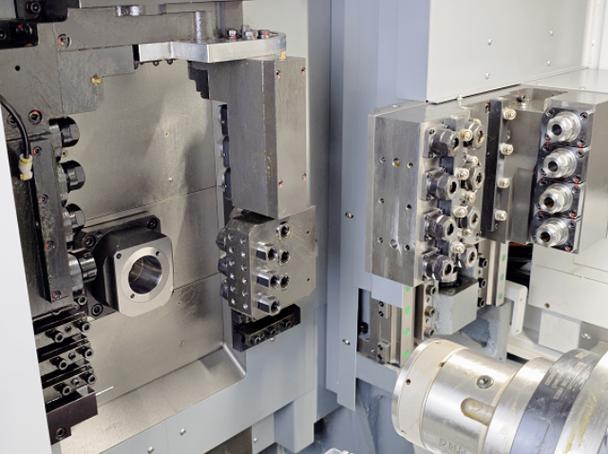
Swiss-type lathes are core equipment for batch machining of precision shafts and small parts. With automated bar feeding, high machining accuracy, and tight cycle times, they are widely used in hardware, automotive, and precision electronics. Unlike standard CNC lathes, their repair philosophy emphasizes light repair, fine adjustment, and targeted troubleshooting.
1. Bar Feeding System: Check Collet and Concentricity First
The most frequent faults are bar offset, material bending, and tail-end dimensional deviation. These are usually caused by worn collets or guide bushings rather than program errors.
- Periodically measure guide bushing wear. Minor wear can be corrected by adjusting clamping clearance; replace when wear exceeds specs.
- Clean oil and chips from inside the collet to prevent slipping and material vibration.
2. Surface Chatter Marks: Focus on Spindle and Damping
Periodic chatter marks in batch production are usually caused by increased spindle bearing clearance or insufficient damping pressure, not tool issues.
- First try adjusting spindle preload parameters and checking damper air/oil pressure.
- If parameter adjustment fails, inspect bearing wear and replace precision bearings with dynamic balance correction.
- Avoid unnecessary disassembly to prevent secondary precision damage.
3. Dimensional Fluctuation: Guideway Lubrication and Slide Clearance
Swiss-type lathes require extremely fine feed precision. Low oil on guideways, loose gib strips, or slight ball screw wear all cause dynamic positioning errors.
- Develop a habit of periodically adjusting gib strip clearance for smooth slide motion without play.
- Check automatic lubrication pump output to prevent localized dry friction and feed stuttering.
4. Electrical Faults: Reset and Tighten Method
Occasional alarms, program lag, and axis homing errors are often caused by loose wiring or parameter drift.
- Periodically tighten servo terminals and encoder connectors. Clean electrical cabinet dust.
- Back up system parameters regularly.
- For unexplained faults, perform parameter reset and origin recalibration first. This resolves approximately 80% of soft electrical faults.
Conclusion
The core principle for Swiss-type lathe repair is: minimize disassembly, maximize calibration, and emphasize prevention. By precisely locating fault sources and applying targeted adjustments, operators can resolve common faults quickly, reduce maintenance costs, and maintain long-term machining accuracy and production efficiency.
Source: Dongguan Huichuan CNC Technology Co., Ltd.